



TAM Receptor
Tyro3; Axl; Mer
TAM receptors, comprising of Tyro3, Axl and Mertk receptors, are receptor tyrosine kinases (RTKs) that are expressed by multiple immune cells including NK cells. The TAM family of receptors and their ligands Gas6 and Protein S (PROS1) are required for the optimal phagocytosis of apoptotic cells in the mature immune, nervous, and reproductive systems.
TAMs are three homologous type I receptor-tyrosine kinases that are activated by endogenous ligands, PROS1 and GAS6. These ligands can either activate TAMs as soluble factors, or, in turn, opsonize phosphatidylserine (PS) on apoptotic cells (ACs) and serve as bridging molecules between ACs and TAMs. Abnormal expression and activation of TAMs have been implicated in promoting proliferation and survival of cancer cells, as well as in suppressing anti-tumor immunity.
TAM Receptor Isoform Specific Products
All Product Categories
-
TAM Receptor Related Products (108)
Related Products (108)

-
Recombinant Proteins (34)
-
Antibodies (2)
-
TAM Receptor Isoform Comparison
-
Axl ligand-1
 0 ImagesCat. No.: HY-184184CAS No.: 3033401-32-7Axl ligand-1 is a highly selective ligand for AXL kinase, exhibiting higher selectivity for AXL over 72 human kinases. Axl ligand-1 serves as a Ligand for Target Protein for PROTAC, which is applied to develop PROTAC degraders with anti-tumor activity, such as PROTAC Axl Degrader 1 (HY-144624). Axl ligand-1 is applicable to breast cancer-related research.
-
MerTK-IN-3
 0 ImagesCat. No.: HY-176482CAS No.: 3029898-85-6
-
Enapotamab vedotin
 0 ImagesCat. No.: HY-P99921CAS No.: 1912424-97-5Synonyms: HuMax-AXL-ADCEnapotamab vedotin is an AXL-targeted antibody-drug conjugate (ADC) with inhibitory potential against high AXL expressing non-small cell lung cancer (NSCLC). Enapotamab vedotin also exhibits resistant to EGFR inhibitor such as Osimertinib (HY-15772).
-
Axl-IN-9
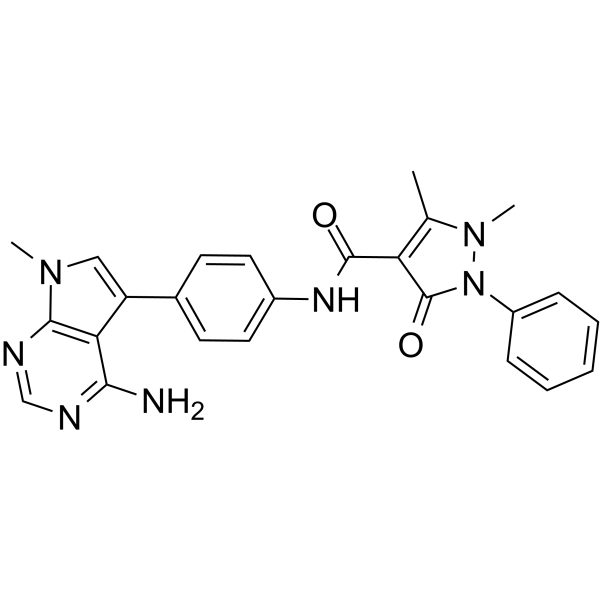 0 ImagesCat. No.: HY-147576CAS No.: 2487649-73-8Axl-IN-9 (Example 10) is a potent AXL inhibitor, with an IC50 of 26 nM. Axl-IN-9 has excellent transmembrane properties. Axl-IN-9 exhibits excellent pharmacokinetic properties in an animal body. Axl-IN-9 can be used for the research of proliferative diseases, autoimmune diseases, allergic diseases, inflammatory diseases, transplant rejection, cancer, or other diseases in mammals.
-
Axl-IN-11
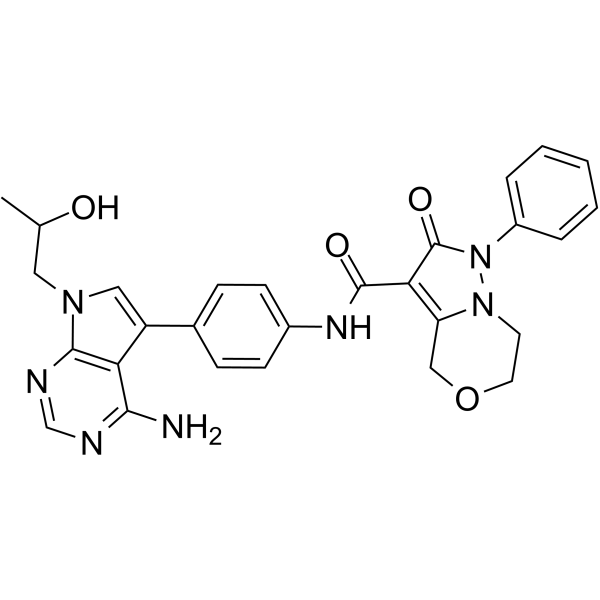 0 ImagesCat. No.: HY-147578CAS No.: 2758688-17-2Axl-IN-11 (Example 1) is a potent AXL inhibitor. Axl-IN-11 can be used for the research of proliferative diseases, autoimmune diseases, allergic diseases, inflammatory diseases, transplant rejection, cancers, viral infectious diseases or other diseases of mammals.
-
PROTAC Axl Degrader 1
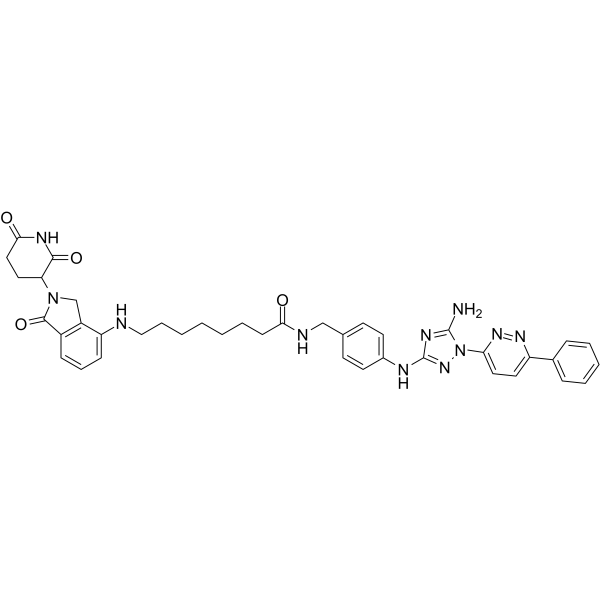 0 ImagesCat. No.: HY-144624CAS No.: 3033401-47-4PROTAC Axl Degrader 1 is an orally active PROTAC degrader targeting the AXL receptor tyrosine kinase, with an IC50 of 0.92 μM against human targets. PROTAC Axl Degrader 1 induces cytoplasmic vacuolization, methuosis (macropinocytosis-induced cell death), excessive macropinosome production, and Rac1 activation. PROTAC Axl Degrader 1 inhibits the proliferation and migration of cancer cells. PROTAC Axl Degrader 1 can be used in breast cancer-related research.
-
TAM-IN-1
 0 ImagesCat. No.: HY-122601CAS No.: 1454847-05-2
-
Multi-kinase-IN-1
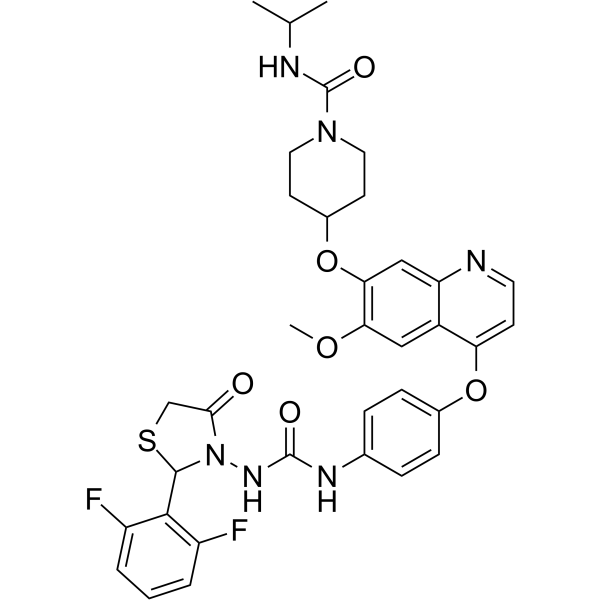 0 ImagesCat. No.: HY-146014CAS No.: 2470807-67-9
-
Axl-IN-4
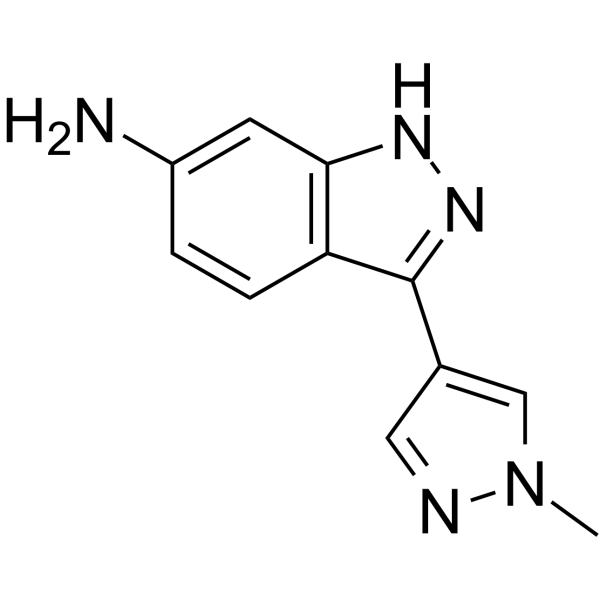 0 ImagesCat. No.: HY-144708CAS No.: 1176456-11-3Axl-IN-4 (Compound 24) is an AXL kinase inhibitor with an IC50 of 28.8 μM.
-
Anti-GAS6 Antibody (KM5321)
 0 ImagesCat. No.: HY-P992231
-
Axl-IN-17
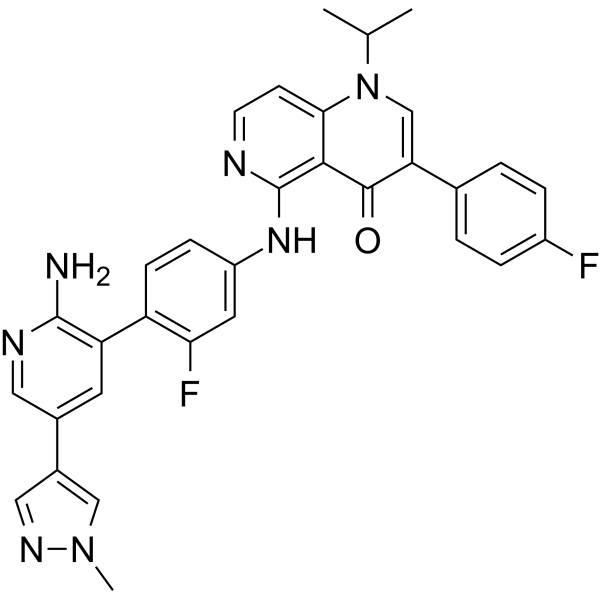 0 ImagesCat. No.: HY-162085CAS No.: 3048409-80-6Axl-IN-17 (compound 13c) is an orally active, selective AXL inhibitor with an IC50 value of 3.2 nM. Axl-IN-17 reveals antitumor efficacy.
-
YAP/TAZ-TEAD-IN-2
 0 ImagesCat. No.: HY-168704YAP/TAZ-TEAD-IN-2 (Compound 51) is a YAP/TAZ-TEAD inhibitor that inhibits the interaction between YAP/TAZ and TEAD. YAP/TAZ-TEAD-IN-2 suppresses the transcriptional activity of TEAD, with an IC50 of 1.2 nM. YAP/TAZ-TEAD-IN-2 inhibits YAP/TAZ-TEAD target genes expression (Cyr61, CTGF, AXL and Survivin) and breast cancer cell proliferation.
-
Axl-IN-10
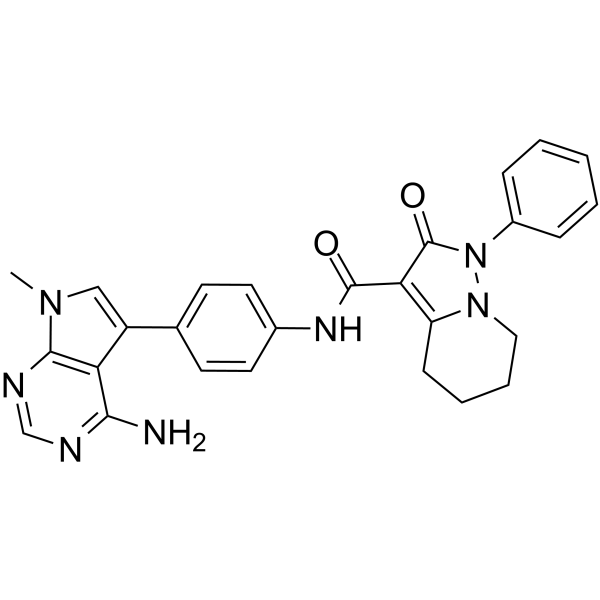 0 ImagesCat. No.: HY-147577CAS No.: 2487649-61-4Axl-IN-10 (Example 1) is a potent AXL inhibitor, with an IC50 of 5 nM. Axl-IN-10 has excellent transmembrane properties.Axl-IN-10 exhibits excellent pharmacokinetic properties in an animal body. Axl-IN-10 can be used for the research of proliferative diseases, autoimmune diseases, allergic diseases, inflammatory diseases, transplant rejection, cancer, or other diseases in mammals.
-
SMU-B
 0 ImagesCat. No.: HY-120387CAS No.: 1253286-90-6SMU-B is the orally active inhibitor for ALK (IC50<0.5 nM), c-ros oncogene 1 (ROS1), c-MET (IC50=1.87 nM) and AXL (IC50=28.9 nM). SMU-B inhibits the proliferation of MKN45, H1993 and H441 with IC50s of 0.02 μM, 1.58 μM and 2.82 μM, respectively. SMU-B exhibits antitumor efficacy in mouse models.
-
Bemcentinib (GMP)
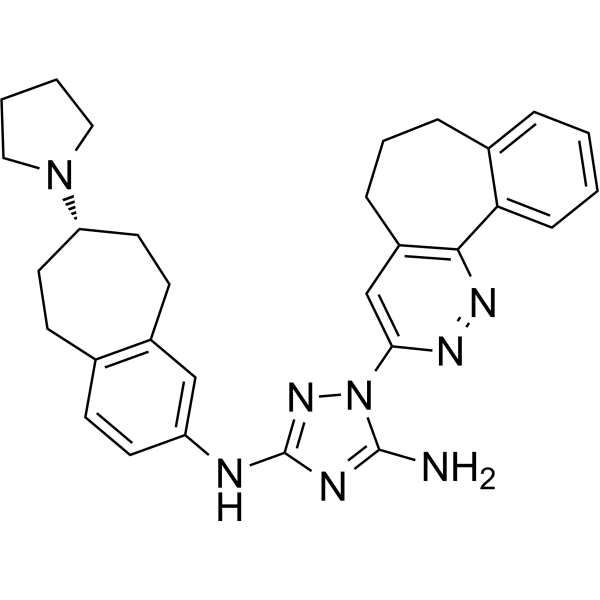 0 ImagesCat. No.: HY-15150GCAS No.: 1037624-75-1Synonyms: R428 (GMP); BGB324 (GMP)Bemcentinib (R428) GMP is Bemcentinib (HY-15150) in GMP grade. GMP-grade small molecules can be used as auxiliary reagents in cell therapy.Bemcentinib (R428) is a selective and orally active Axl inhibitor with an IC50 of 14 nM. Bemcentinib retards cancer cell migration and invasion. Bemcentinib exhibits >100-fold selectivity for Axl versus Abl and 50- and >100-fold selectivity over TAM family kinases Mer and Tyro3, respectively, in cells. Bemcentinib blocks tumor spread and prolongs survival in models of metastatic breast cancer.
-
HIV-IN-7
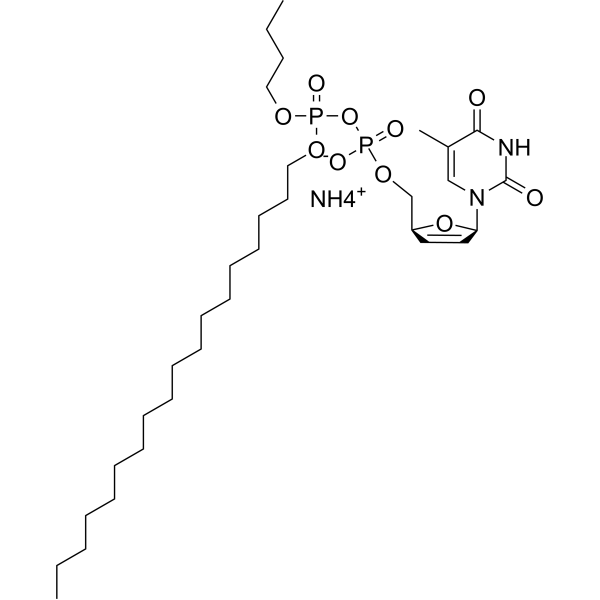 0 ImagesCat. No.: HY-149491CAS No.: 3032472-86-6
-
Axl/Mer/CSF1R-IN-1
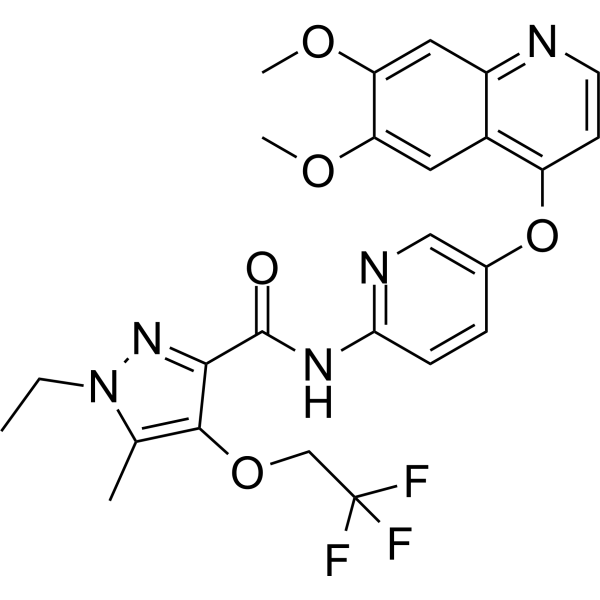 0 ImagesCat. No.: HY-153012CAS No.: 2394874-60-1Axl/Mer-IN-1 (Compound 1) is an Axl/Mer receptor tyrosine kinase (Axl/Mer RTK) and CSF1R inhibitor with Kds of <0.1 μM.
-
Axl-IN-21
 0 ImagesCat. No.: HY-179535CAS No.: 1958081-87-2Axl-IN-21 is an orally active and selective AXL inhibitor (Kd = 2.7 nM, IC50 = 4.0 nM). Axl-IN-21 displays kinase selectivity and retains strong activity against cancer-related mul-kinases (Mer with Kd = 1.4 nM, DDR1 with IC50 = 22.2 nM, HIPK4 with Kd = 11.0 nM and LOK with Kd =10 nM). Axl-IN-21 overcomes tumor microenvironment-driven resistance by blocking CAF-derived GAS6-induced AXL/STAT3/ABCG1 signaling, restoring chemosensitivity and inhibiting drug efflux in gastric cancer (GC). Axl-IN-21 suppresses TGF-β1-induced epithelial-mesenchymal transition (EMT), migration, and invasion in MDA-MB-231 cells. Axl-IN-21 exhibits no significant cytotoxicity in non-cancerous cells. Axl-IN-21 can be research for triple negative breast cancer and gastric cancer[1] [2] .
-
Axl-IN-18
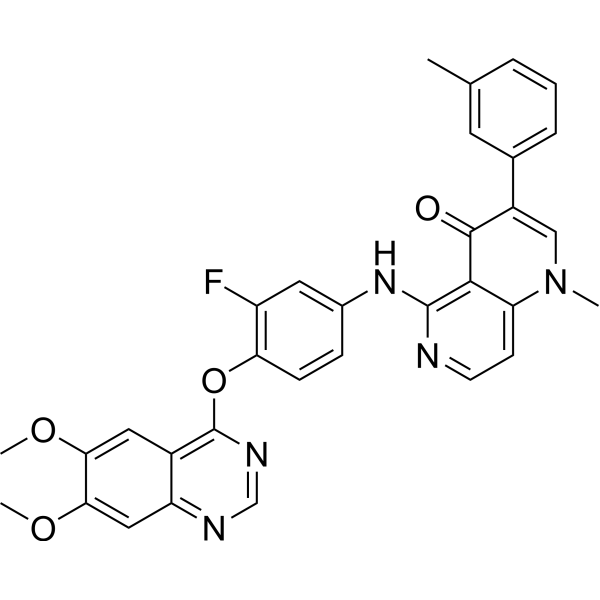 0 ImagesCat. No.: HY-162103CAS No.: 3040329-68-5Axl-IN-18 (compound 25c) is a potent and selective type II AXL inhibitor. Axl-IN-18 shows excellent AXL inhibitory activity (IC50=1.1 nM) and 343-fold selectivity over the highly homologous kinase MET in biochemical assays (IC50=377 nM). Axl-IN-18 significantly inhibits AXL-driven cell proliferation, dose-dependently suppresses 4T1 cell migration and invasion, and induces apoptosis. Axl-IN-18 shows noticeable antitumor efficacy in a BaF3/TEL-AXL xenograft model.
-
C-Met/Axl-IN-1
 0 ImagesCat. No.: HY-170954C-Met/Axl-IN-1 (Compound 22a) is an orally active and selective type II c-Met/Axl inhibitor with IC50 values of 1 nM and 10 nM, respectively. C-Met/Axl-IN-1 can inhibit proliferation, induce cell cycle arrest and apoptosis of tumor cells. C-Met/Axl-IN-1 has strong anti-tumor activity.




